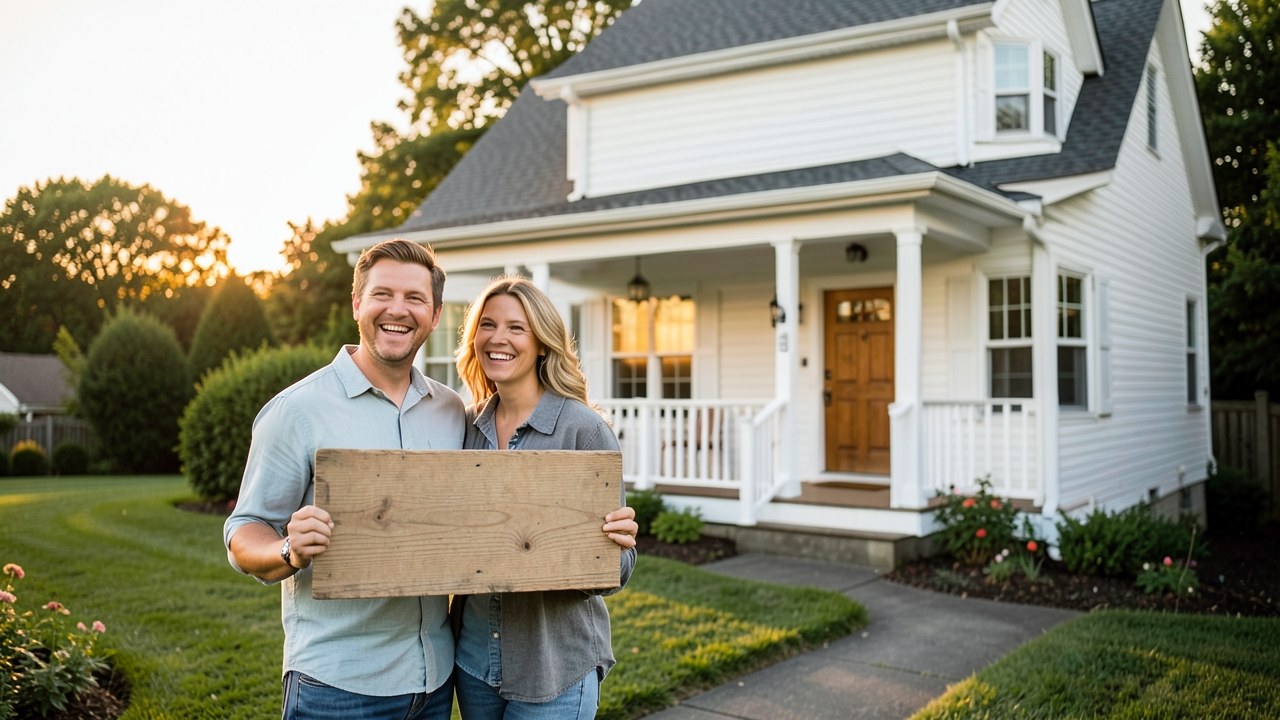
Steps to Buying Your First Home
Buying your first home can feel overwhelming, but breaking it down into clear steps helps you move forward with confidence. This guide walks you through the entire process, from understanding your finances to getting the keys on closing day.
The journey typically begins with saving for a down payment, getting preapproved for a mortgage, finding the right property, making an offer, and finally closing the sale. Along the way, you'll need to understand mortgage insurance, closing costs, and the various programs available to first-time buyers.
- Save for a down payment and budget for closing costs.
- Get preapproved for a mortgage with TD.
- Search for homes within your budget.
- Make an offer and secure financing.
- Close the deal and plan for homeownership.
- Plan for ongoing costs like property taxes, utilities, and maintenance.
Sources: TD Canada Trust, Financial Consumer Agency of Canada (FCAC)
Getting Preapproved for a TD Mortgage
Preapproval tells you how much mortgage you may qualify for, so you can shop for homes with a clear budget in mind. TD recommends getting preapproved before you start house hunting, as it helps you narrow down your options and shows sellers you're a serious buyer.
You can apply for a TD mortgage preapproval online or in person at a branch. The application will involve a review of your income, debts, and credit history. TD will also explain the mortgage amount you may be eligible for and the interest rate you could get, which helps you plan your monthly payments.
- Preapproval sets your budget before house hunting.
- Apply online or in person at a branch.
- Be prepared to provide income, asset, and debt information.
- Preapproval helps you compare different mortgage options.
Sources: TD Canada Trust
Saving for a Down Payment and Closing Costs
In addition to the down payment, you should budget for closing costs, which typically range between 1.5% and 4% of the home's purchase price. These costs include legal fees, title insurance, land transfer taxes, and other expenses. Knowing this range ahead of time helps you avoid surprises.
You may be able to use a few government programs to help fund your down payment. For example, the Home Buyers' Plan (HBP) allows you to withdraw up to $60,000 from your RRSP (or up to $120,000 for a couple) to buy your first home. The First Home Savings Account (FHSA) lets you save up to $40,000 tax-free, with annual contributions capped at $8,000. Other incentives like the Home buyers' amount tax credit and the GST/HST new housing rebate may also be available.
- For homes from $500,000 to $1.5 million, 5% on the first $500,000 and 10% on the rest.
- Budget for closing costs: 1.5% to 4% of the purchase price.
- Consider using the Home Buyers' Plan (HBP) or First Home Savings Account (FHSA) to save.
Sources: TD Canada Trust, Financial Consumer Agency of Canada (FCAC)
Understanding Mortgage Insurance
If your down payment is less than 20% of the home's value, you're required to get mortgage default insurance. This insurance protects the lender in case you can't make your payments. It's available through providers like CMHC, and the cost is added to your mortgage payments.
When you get a mortgage, lenders look at two key ratios to determine how much you can borrow: Gross Debt Service (GDS) and Total Debt Service (TDS). The GDS ratio measures your housing costs—including mortgage payments, property taxes, utilities, and condo fees—against your gross household income. This ratio should generally be at or under 35%. The TDS ratio adds all your other debts, such as credit cards and car loans, and should be at or under 42% of your gross income. These guidelines help ensure you can comfortably afford your mortgage.
- Mortgage default insurance is required for down payments under 20%.
- GDS ratio: housing costs should be at or under 35% of your pre-tax income.
- TDS ratio: housing costs plus other debts should be at or under 42% of your pre-tax income.
Sources: TD Canada Trust
Making an Offer and Securing Financing
Once you've found a home you love, you'll make an offer. If the seller accepts, you'll finalize your mortgage arrangement with TD. At this point, you'll want to ensure your financing is in place and that you have the funds for your down payment and closing costs.
TD offers a variety of mortgage options, so it's important to review the features and conditions carefully to choose the product that fits your needs. Ask about any current offers that may be available with a new TD mortgage, as conditions and expiry dates apply.
Remember to have your preapproval ready to strengthen your offer and speed up the financing process.
- Have your preapproval ready to strengthen your offer.
- Review TD mortgage options to find the right fit.
- Ask about current offers and promotions.
Sources: TD Canada Trust
Closing Day and Beyond
Closing day is the final step in the home buying process. You'll sign the legal documents, pay any remaining costs, and receive the keys to your new home. Your TD mortgage will then be active, and you'll start making monthly payments.
After closing, it's important to keep your mortgage in good standing. Understand your prepayment privileges: most lenders allow you to make extra payments, but you typically cannot carry unused prepayment amounts to the next year. If you consider refinancing or accessing your home's equity, you have options like a Home Equity Line of Credit (HELOC), which lets you borrow up to 65% of your home's value. You only pay interest on the amount you actually borrow.
You should also know some key protections. For example, if you have a federally regulated lender, they must provide a renewal statement at least 21 days before the end of your term. If they plan to not renew, they must notify you at least 21 days in advance. And if you ever face financial hardship, a mortgage payment deferral may allow you to delay payments temporarily, but interest continues to accrue, and the principal increases, so it should be used carefully.
- Closing costs must be paid on closing day.
- Understand your prepayment privileges and limits.
- Consider a HELOC if you need access to equity later.
- Know your lender's disclosure obligations and renewal timelines.
Frequently asked questions
Are there special programs for first-time buyers?
Yes, several federal programs exist, including the Home Buyers' Plan, the First Home Savings Account, the Home buyers' amount tax credit, and a potential GST rebate for new homes under $1 million if the proposed Bill C-4 becomes law.
Sources: Financial Consumer Agency of Canada (FCAC), Department of Finance CanadaWhat costs should I budget for on top of the down payment?
Budget for closing costs, which typically range from 1.5% to 4% of the home's purchase price. These include legal fees, title insurance, land transfer taxes, and other expenses. You'll also need to set aside funds for property taxes, home insurance, and any immediate repairs or furnishings.
Sources: Financial Consumer Agency of Canada (FCAC)Can I buy a home with a 5% down payment?
Yes, for homes priced up to $500,000, a 5% down payment is allowed, provided you meet the mortgage qualifications and obtain mortgage default insurance.
Sources: TD Canada TrustSources
- Mortgage fees: Prepayment penalties — Financial Consumer Agency of Canada (FCAC)
- Renewing your mortgage — Financial Consumer Agency of Canada (FCAC)
- Mortgage payment deferrals — Financial Consumer Agency of Canada (FCAC)
- Home equity lines of credit — Financial Consumer Agency of Canada (FCAC)
- TD Mortgage Affordability Calculator | TD Canada Trust — TD Canada Trust
- TD First-Time Home Buyer - TD Canada Trust — TD Canada Trust
- Tips for First-Time Home Buyers — TD Canada Trust
- Buying a home — Financial Consumer Agency of Canada (FCAC)
- Briefing binder created for the Minister of Finance and ... — Department of Finance Canada